Four New Express Entry Categories Introduced in 2026: What Applicants Need to Know Canada has introduced four new Express Entry categories for 2026, further refining
Four New Express Entry Categories Introduced in 2026: What Applicants Need to Know
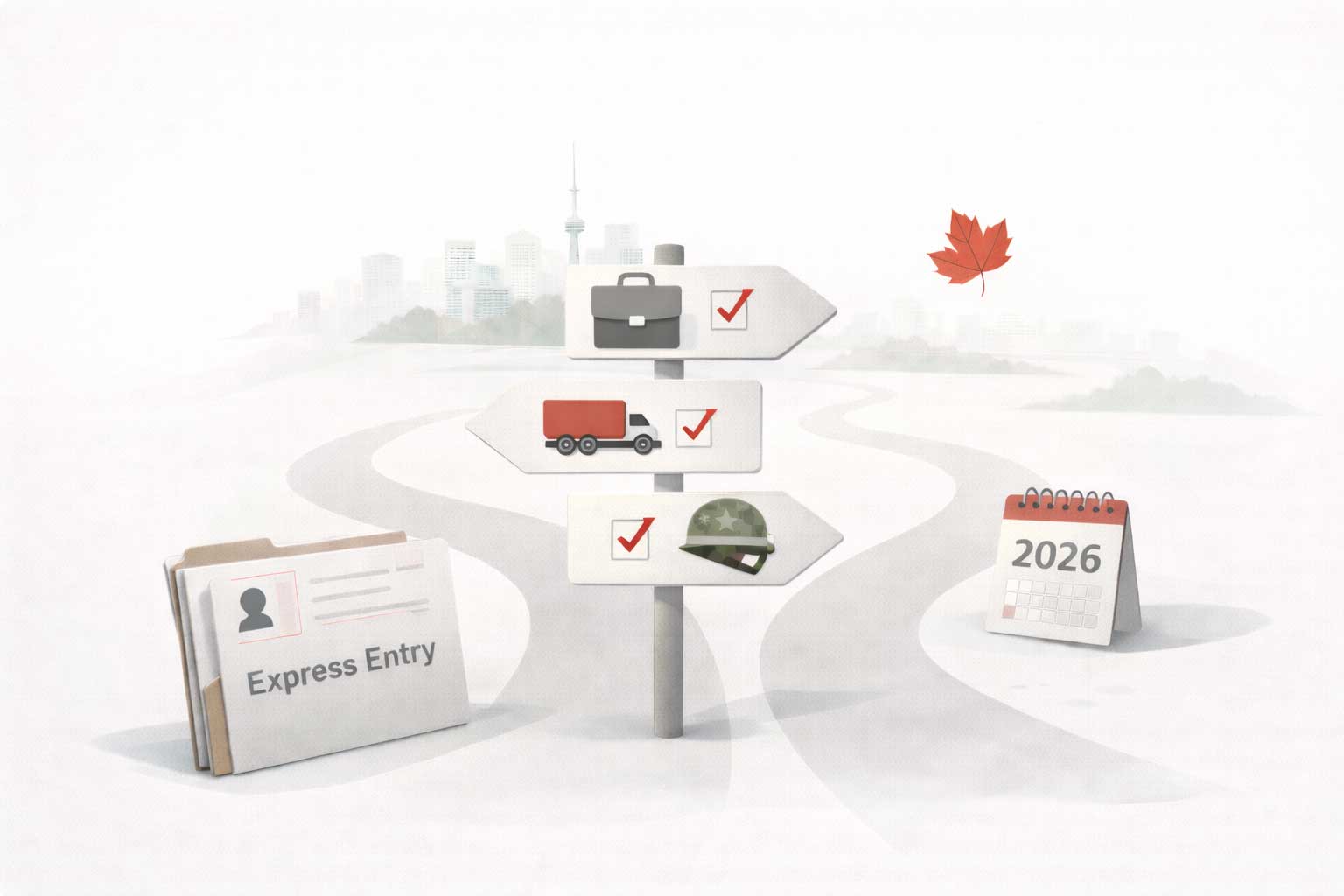
Canada has introduced four new Express Entry categories for 2026, further refining its category-based selection system to better address labour shortages and economic priorities. These changes were officially announced by Immigration, Refugees and Citizenship Canada (IRCC) in February 2026 and are now part of Canada’s federal economic immigration strategy.
The new categories prioritize candidates with specific work experience, allowing IRCC to issue Invitations to Apply (ITAs) based on labour-market demand rather than solely on Comprehensive Ranking System (CRS) scores.
Table of Contents (Quick Access)
The four New Express Entry Categories for 2026
1. Researchers
This category targets individuals who have gained professional experience in Canada, particularly in academic, research, and senior leadership roles.
Eligible occupations include:
- University professors and lecturers
- Post-secondary teaching and research assistants
- Researchers and academic professionals
2. Senior Managers with Canadian Work Experience
- Senior managers across sectors such as business, education, healthcare, and public services
Candidates with recent Canadian work experience in these roles are prioritized under this category.
3. Transport Occupations
Canada has added a new category for transport-related occupations, reflecting ongoing labour shortages in aviation, automotive, and logistics sectors.
This category includes roles such as:
- Pilots, flight engineers, and flight instructors
- Aircraft maintenance engineers and inspectors
- Automotive service technicians and mechanics
- Heavy-duty equipment and transport mechanics
Applicants with qualifying work experience in transport occupations may receive targeted invitations through Express Entry.
4. Skilled Military Recruits
A unique addition in 2026 is a category designed for skilled military personnel.
To qualify, candidates generally must:
- Have at least 10 years of continuous service in the armed forces of a foreign country
- Hold a formal job offer of at least three years from the Canadian Armed Forces
- Possess a minimum two-year post-secondary credential
This category allows eligible military professionals to apply for permanent residence through Express Entry.
Updated Work Experience Requirement
Alongside the introduction of new categories, IRCC has increased the minimum work experience requirement for category-based selection:
- Applicants must now have at least one full year of work experience
- The experience must be gained within the past three years
- Work experience can be obtained inside or outside Canada
Previously, some category-based draws required only six months of experience.
Existing Categories Remain in Place
In addition to the new categories, IRCC continues to prioritize candidates under existing Express Entry categories, including:
- French-language proficiency
- Healthcare and social services occupations
- Skilled trades
- Physicians with Canadian work experience (introduced in late 2025)
These categories will continue to be used for targeted Express Entry draws in 2026.
How Category-Based Express Entry Works
Under the category-based selection system, IRCC issues ITAs to candidates who:
- Meet the eligibility requirements of an Express Entry program (CEC, FSW, or FST)
- Have qualifying work experience in an identified priority category
- Meet language and admissibility requirements
Category-based draws often result in lower CRS cut-off scores compared to general Express Entry draws, improving the chances for candidates in in-demand occupations.
Why These Changes Matter
The expansion of Express Entry categories reflects Canada’s shift toward a more targeted, skills-based immigration system. By prioritizing sectors such as research, transport, and specialized military roles, Canada aims to:
- Address persistent labour shortages
- Strengthen key industries
- Attract experienced professionals with long-term economic impact
For many applicants, these changes create new and more accessible pathways to permanent residence.
categories in 2026
- New categories focus on researchers and senior managers, transport occupations, and skilled military recruits
- Minimum work experience for category-based draws is now one year
- Existing priority categories, including healthcare and French-language proficiency, remain active
- Category-based selection can significantly improve PR chances for eligible candidates
Disclaimer
This article is for informational purposes only and does not constitute legal advice. Immigration policies are subject to change. Applicants should always consult official IRCC sources or licensed immigration professionals before applying.
Are you qualified for the newly updated Express Entry categories in 2026? Contact our Canadian immigration experts today to calculate your CRS score and start your permanent residence application!