Immigration, Refugees and Citizenship Canada (IRCC) has officially confirmed that the list of fields of study eligible for the Post-Graduation Work Permit (PGWP) will remain
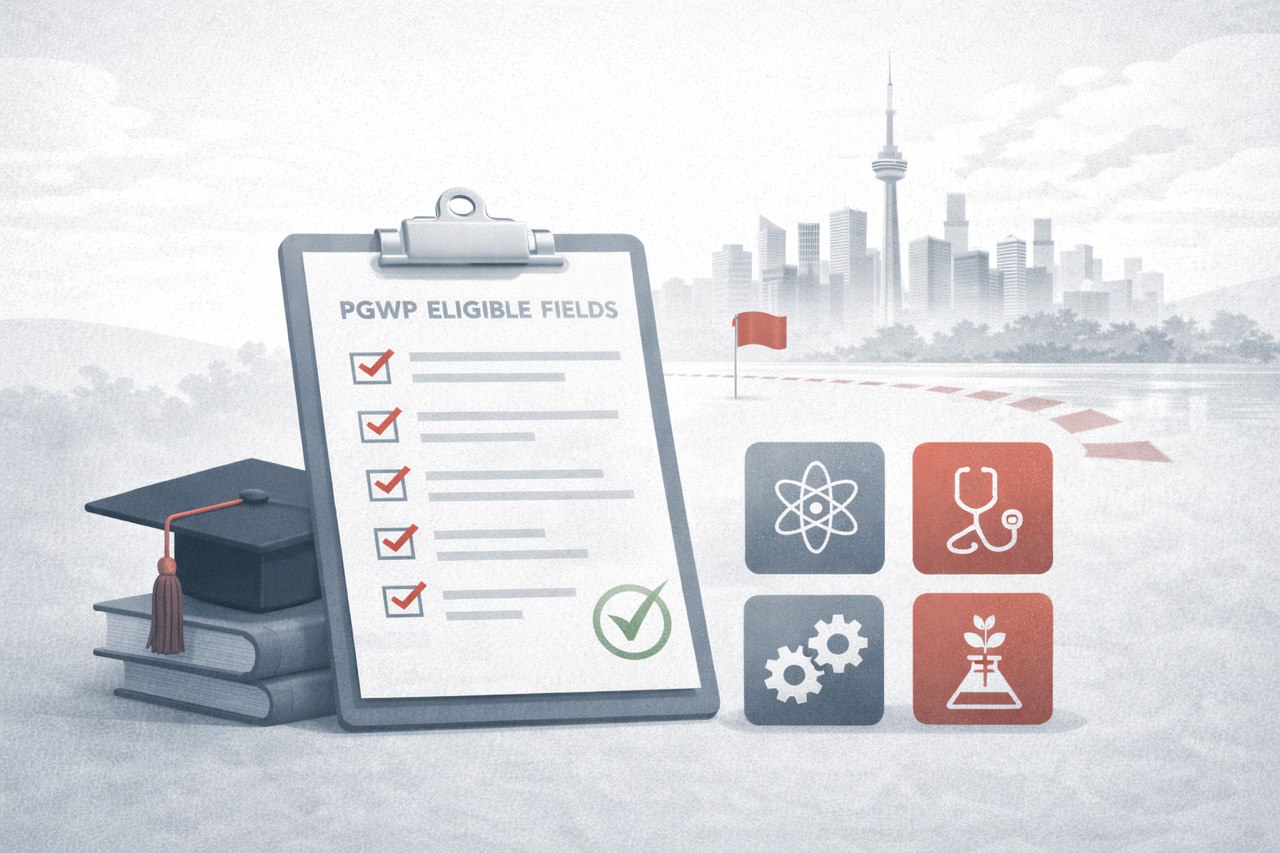
Immigration, Refugees and Citizenship Canada (IRCC) has officially confirmed that the list of fields of study eligible for the Post-Graduation Work Permit (PGWP) will remain unchanged throughout 2026. This “freeze” means that no programs will be added or removed during the 2026 calendar year.
This decision provides much-needed predictability for international students, allowing them to make informed academic and immigration-related decisions without the risk of sudden policy shifts regarding their eligibility to work after graduation.
Table of Contents (Quick Access)
1) The 2026 PGWP Eligibility Freeze
The freeze on the eligible list ensures that students who have already started their programs or are planning to apply in 2026 can proceed with confidence. If a field of study is currently on the list of 1,107 eligible programs, it is guaranteed to remain eligible until the end of 2026.
2) Why IRCC Decided to Maintain the 1,107 Fields
In 2025, IRCC implemented significant changes to align PGWP eligibility with Canada’s labour market. After a period of adjustments and reversals in mid-2025 aimed at protecting student interests, the final list settled at 1,107 fields. To provide stability and clarity for both students and educational institutions, IRCC has opted for a “no-change” policy for the current year.
3) Priority Sectors for PGWP-Eligible Programs
The current list focuses on sectors with critical labor shortages. Below are the primary categories that remain eligible:
| Target Sector | Included Fields |
|---|---|
| STEM | Science, Technology, Engineering, and Math |
| Healthcare | Nursing, Social Services, and Medical Tech |
| Skilled Trades | Construction, Mechanics, and Agriculture |
| Transport & Education | Logistics, Early Childhood Education, etc. |
4) Degree vs. Non-Degree Program Rules
It is crucial to differentiate between program types when determining eligibility:
- Bachelor’s, Master’s, and Doctoral Degrees: These students are generally exempt from the specific field-of-study list and remain eligible for PGWP regardless of their major.
- Diplomas and Certificates: Students in non-degree programs must ensure their program’s six-digit CIP (Classification of Instructional Programs) code is included in the 1,107 eligible fields.
5) Strategic Advice for International Students
Before applying for a study permit in 2026, students should:
- Confirm the specific CIP code of their chosen program with their designated learning institution (DLI).
- Verify that the code appears on the official IRCC list.
- Plan for future Permanent Residency (PR) pathways, as PGWP eligibility is often the first step toward gaining the necessary Canadian work experience.
📞 Planning your study and work path in Canada?
Ensuring your program is PGWP-eligible is vital for your future. Our team at i2Canada, managed by Regulated Canadian Immigration Consultants (RCIC), can help you verify your eligibility and secure your study permit.
For professional consultation and assessment, contact us via the links below: